

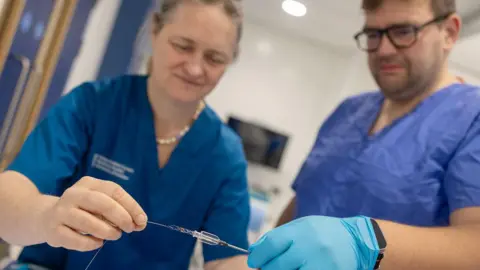
Doctors from the Scottish region and the United States have successfully completed what is considered a historic stroke procedure employing automated systems.
Prof Iris Grunwald, associated with a medical institution, performed the long-distance surgery - the elimination of vascular blockages after a brain attack - on a donated body that had been contributed to medicine.
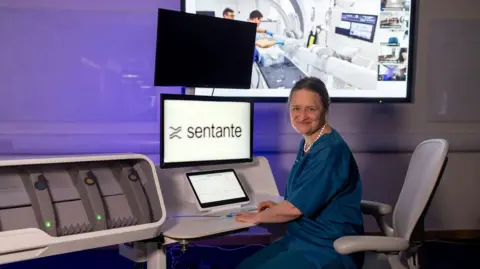
The surgeon was located at a medical facility in the location, while the body she was operating on with the machine was across the city at the academic institution.
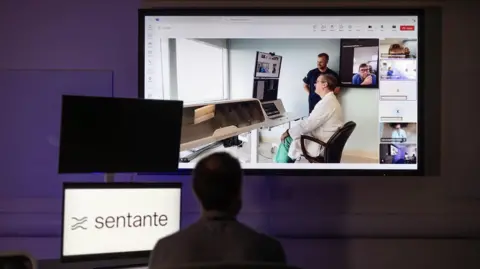
Subsequently, a neurosurgeon from the American state used the system to carry out the initial intercontinental procedure from his Florida location on a human body in Dundee over significant distance away.
The team has described it as a potential "revolutionary development" if it becomes approved for use on patients.
The medics believe this innovation could revolutionize cerebral healthcare, as a limited availability of expert care can have a direct impact on the healing potential.
"It seemed like we were witnessing the first glimpse of the next generation," said Prof Grunwald.
"While in the past this was considered science fiction, we proved that all stages of the procedure can currently be accomplished."
The Scottish institution is the international education hub of the global medical association, and is the exclusive site in the United Kingdom where doctors can work with cadavers with actual blood pumped through the vessels to mimic treatment on a live human.
"This was the first time that we could execute the complete clot removal operation in a actual human specimen to demonstrate that every phase of the operation are achievable," stated the primary researcher.
A healthcare leader, the chief executive of a medical organization, called the long-distance operation as "an extraordinary advancement".
"Over extended periods, individuals from isolated regions have been limited in obtaining to thrombectomy," she continued.
"Robotics like this could correct the imbalance which occurs in brain care throughout Britain."
How does the technology work?
An brain attack takes place when an vascular pathway is clogged by a clot.
This disrupts vascular flow to the cerebral tissue, and neural cells cease working and die.
The optimal therapy is a surgical extraction, where a expert uses catheters and wires to extract the blockage.
But what occurs when a individual is unable to reach a specialist who can conduct the operation?
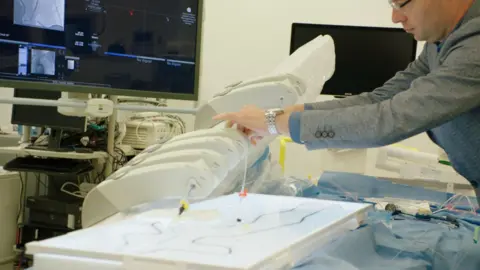
The medical expert said the experiment showed a mechanical device could be linked with the equivalent surgical tools a surgeon would typically employ, and a medic who is attending the case could readily join the tools.
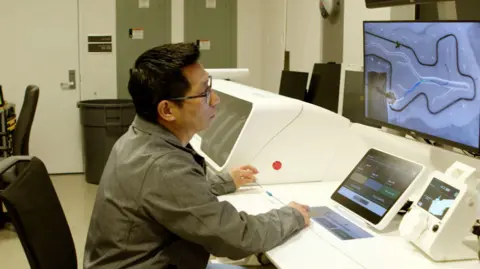
The expert, in another location, could then operate and direct their individual tools, and the automated system then executes precisely identical actions in live timing on the individual to carry out the surgical procedure.
The patient would be in a medical facility, while the doctor could perform the procedure via the technological system from anywhere - even their private dwelling.
The medical expert and Ricardo Hanel could view real-time imaging of the subject in the experiments, and monitor progress in live conditions, with the Dundee expert stating it took just a brief period of training.
Technology companies prominent manufacturers were involved in the initiative to secure the communication link of the robot.
"To perform surgery from the United States to Scotland with a brief latency - a moment - is absolutely amazing," stated the medical expert.
Innovations in cerebral healthcare
Prof Grunwald, who has received recognition for her research and is also the senior official of the World Federation for Interventional Stroke Treatment, explained there were key issues with a conventional clot removal - a worldwide deficiency of surgeons who can do it, and treatment depends on your physical place.
In the Scottish nation, there are merely three sites people can receive the procedure - three major cities. If you reside elsewhere, you must commute.
"The intervention is highly dependent on timing," said Prof Grunwald.
"For every six minutes of waiting, you have a one percent reduced probability of having a positive result.
"This system would now offer a innovative method where you're not depending on where you live - preserving the precious time where your neural tissue is otherwise dying."
Medical statistics indicated there were {9,625 ischaemic strokes|numerous cerebral events|


